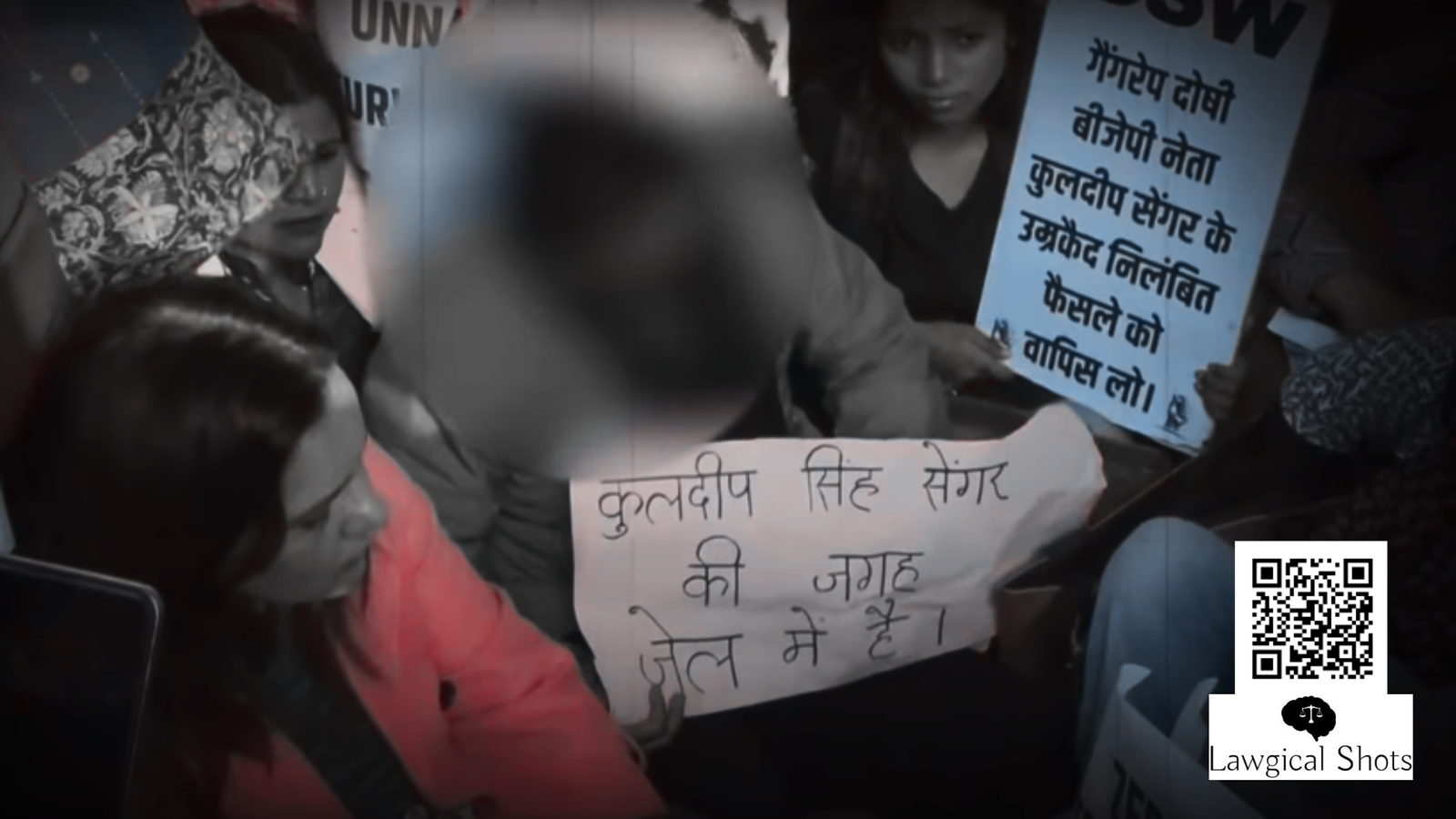

The Unnao Rape case is back in headlines, and again, the noise is very much due to proposed injustice. Earlier, the matter caught headlines because someone in power abused and wanted to flee with clean hands. Now, the High Court extended relief to the ex-BJP leader and Unnao rape convict Kuldeep Singh Sengar. However, within a week, on an appeal by the Central Bureau of Investigation (CBI), the Apex Court reversed the suspension. Let us understand the reasoning given by the respective Courts in this matter.
Unnao Rape Case
In 2017, another barbaric rape case shook India when a 17-year-old girl alleged rape by the then Member of the Legislative Assembly (MLA) from Bangermau, in Unnao, Uttar Pradesh – Kuldee Singh Sengar. The matter grabbed eyeballs because of the aftermath of the complaint when the victim’s father faced false charges under Arms Act. In 2018, her father died while in custody under suspicious circumstances. The Trial Court verdict in 2019 brought justice for the victim when the Court found Kuldeep Sengar guilty of kidnapping and rape of minor girl from Unnao. Sengar was sentenced to life imprisonment for the remainder of life along with a fine of Rs 25 lakhs and additional compensation of Rs 10 lakhs to the victim’s mother.
Recently, the Delhi High Court had suspended the sentence of Sengar while appeals against his conviction remained pending before the Appellate Court. However, the High Court Order was appealed against by the CBI before the Supreme Court. This led to the reversal of the suspension of sentence.
Kuldeep Sengar’s Suspension of Sentence by High Court
What we already know is that Kuldeep Sengar’s plea for suspension of sentence awaiting appeal against conviction was allowed by the Delhi High Court. However, before jumping upon any conclusion, let us have a look at the reasoning given in the High Court order.
Kuldee Singh Sengar has been convicted under Section 6 of the POCSO Act for aggravated penetrative sexual assault. However, the High Court discussed that an MLA did not fall under the definition of ‘public servant’ as defined under the Indian Penal Code. The High Court even rejected the victim’s argument of Sengar being in a position of trust or authority in relation to the Victim/Survivor, if not public servant. It was reasoned that the same argument was dismissed before Trial Court and was not appealed then. For that reason, the Court prima facie found the punishment of imprisonment for the remainder of his natural life. Before the POCSO 2019 amendment, the punishment was 7 years, which Kuldeep Sengar had already undergone, as pointed out by the High Court. With that, the Delhi High Court suspended the Unnao rape convict’s sentence during pendency of appeal.
Supreme Court’s Blow to Kuldeep Sengar
When the Delhi High Court ordered suspension of Unnao rape convict Kuldeep Singh Sengar’s sentence, we witnessed uproar across the nation. The release of murder and rape convict just like that, more so when he has already shown power game in suppressing the prosecution and investigation, did not go well with the society. The CBI also did not sit back but appealed against suspension of sentence before the Apex Court.
The matter was heard on December 29, 2025 before the Supreme Court Vacation Bench of Chief Justice of India Justice Surya Kant, Justice JK Maheshwari, and Justice Augustine George Masih.
The Bench found various substantial questions of law to be considered in this case. The Bench acknowledged that in ordinary circumstances, a convict or under-trial prisoner released on bail after a Trial or High Court order is not stayed or reversed without being heard. However, the Court highlighted the unique facts and circumstances where Sengar is also convicted and sentenced under Section 304 part 2 for culpable homicide not amounting to murder. Hence, the Apex Court stayed the High Court order suspending Kuldeep Sengar’s sentence.
System of Appellate Courts
In India, the Judicial system is subject to hierarchy. From Magistrate Courts to the Supreme Court of India, the jurisdiction of territory, matters, pecuniary and penal extent, everything is specified. The decision of the Court is also subject to review through appeals. In other words, if the accused is not satisfied by the decision of the Trial Court due to some injustice, they may bring an appeal before the Appellate Court.
To understand this with an example, a person who was convicted for murder by the Sessions Court may appeal before the High Court against the said conviction order. If the High Court allows the appeal and reverses the conviction, the State can appeal the same before the Supreme Court, which in turn may reinforce the conviction, or uphold the High Court’s decision.
That’s what happened in Kuldeep Sengar’s case where the High Court allowed suspension of sentence due to pendency of appeal. However, the Supreme Court reversed the suspension. Now, Unnao rape convict Kuldeep Singh Sengar will have to wait for the consequences of pending appeal against conviction to step out of the jail.