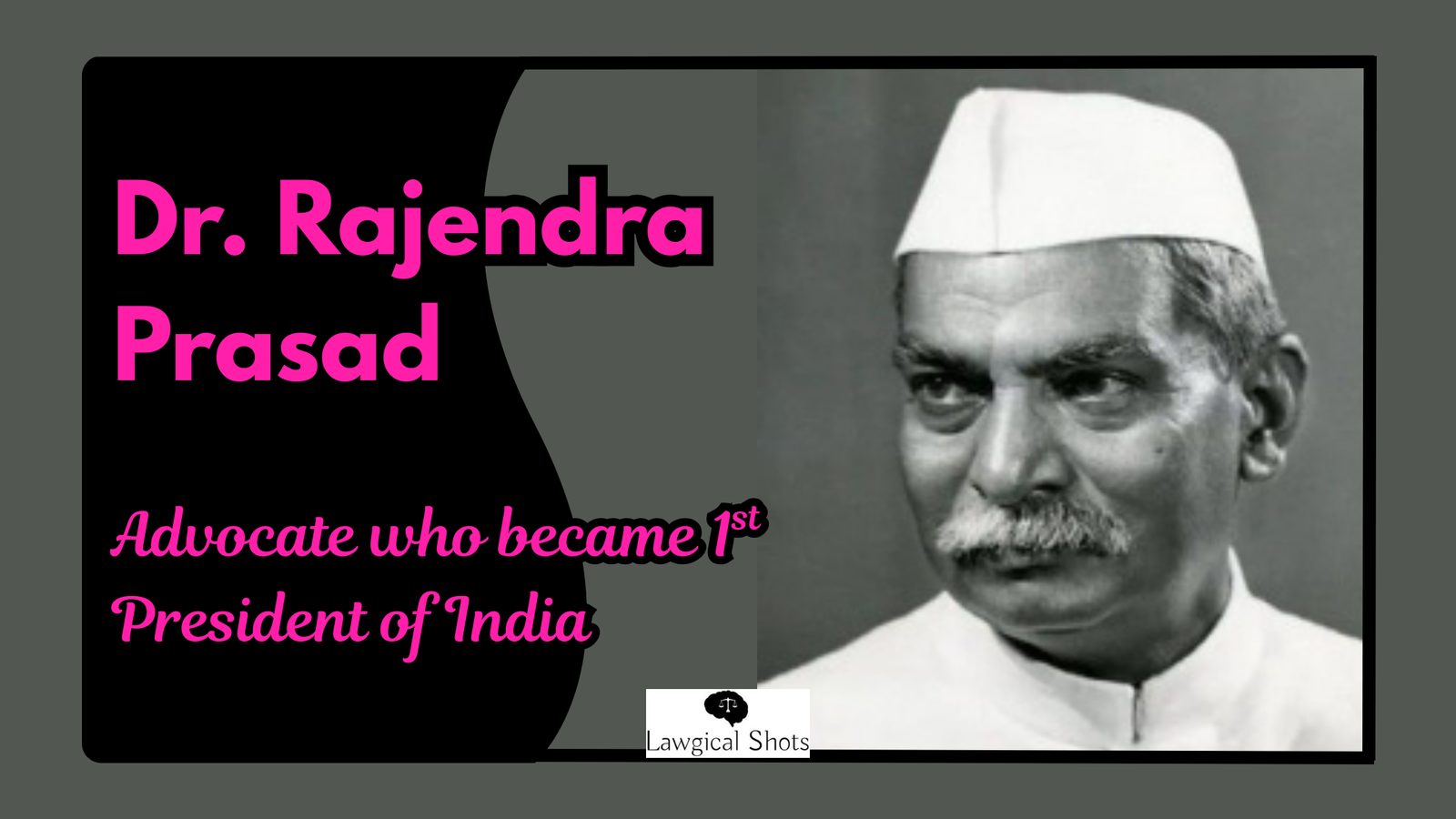

We all know Dr. Rajendra Prasad as the first President of India after we attained independence in 1947. Most of us are unaware of the fact that he studied law and practiced as an advocate. Dr. Rajendra Prasad is known for his humility, dedication, and profound commitment to the principles of democracy. India celebrates Advocate’s Day to commemorate the birth anniversary of Dr. Rajendra Prasad. This blog post is a small tribute to the Advocate who turned out to be India’s first President.
Personal Details
Dr. Rajendra Prasad was born on December 3, 1884 in Ziradei, Siwan Bihar. His father, Shri Sri Mahadev Sahai Ziradei was also a scholar of Persian and Sanskrit. However, customs of village still governed the lives of youngsters. Young Rajendra Prasad was the youngest in a joint family and was married off to Rajvansh Devi when he was 12 years old.
Educational Background
Since childhood, Rajendra proved himself to be exceptional at academics. Apart from studies, young Rajendra was fond of playing Kabaddi with his friends, which included both Hindus and Muslims. Dr. Rajendra Prasad was a bright student who aced the entrance examination to the University of Calcutta to be awarded a scholarship of Rs 30 per month.
While he was a student of law, Shri Gopal Krishna Gokhale offered him to join Servants of India Society in 1905. However, Rajendra refused, reclaiming his sense of duty toward his family and education. However, he felt “miserable” enough at the time that for the first time his academics witnessed a downfall, strong enough that he barely cleared his law examinations. Overcoming such thoughts, he got back to studies with a new light and vigor to pass the 1915 Masters examination with honors. Dr. Rajendra Prasad was known for his acute legal acumen.
Fight for Independence
Being a lawyer, he knew that he would eventually be a part of the fight for independence. Gandhiji was on a fact finding mission in Chamaparan district of Bihar and called Dr. Rajendra Prasad to address grievances of local peasants with other volunteers. Dr. Rajendra Prasad obliged, though he was not much impressed with Gandhiji’s appearance or conversation. However, as time passed, Rajendra was deeply moved by Gandhi’s dedication, conviction and courage. That’s when Rajendra vowed to do everything to help, being a skilled lawyer and an enthusiastic volunteer.
Influenced by Gandhi’s views on caste and untouchability, Rajendra reduced the number of workers to one, and sought ways to simplify his life. He felt no shame in sweeping the floor, washing his own utensils, the simple tasks that others had been doing for him for quite some time.
During natural calamities, he volunteered. During independence movements, he used his litigation skills. With non-cooperation movement, Dr. Rajendra Prasad gave up litigation and started a National College near Patna,1921. The same was shifted to Sadaqat Ashram on the banks of the Ganga. Be it Chauri Chaura, or Salt Satyagraha, Rajendra stood behind Gandhi during praise and criticism.
Political Rise of Dr. Rajendra Prasad
Dr. Rajendra Prasad’s efforts for minor movements to bigger independence of India did not go futile, but rose his political image. In 1934, he presided over the Bombay session of the Indian National Congress. However, after the resignation of Shri Subhash Chandra Bose in 1939, Dr. Rajendra Prasad was elected as the President of the Congress.
In July 1946, when the Constituent Assembly was established to frame the Constitution of India, he was elected its President.
From Advocate to President of India: Dr. Rajendra Prasad
Being the President of the Constituent Assembly, Dr. Rajendra Prasad played a crucial role in the design of present day India through the Constitution of India. When the same came in full force on January 26, 1950, Dr. Rajendra Prasad became independent India’s first President. President Rajendra Prasad was known for his humility, impartiality and dedication towards the principles of democracy. Despite the position of President of India, he shone for simple lifestyle and commitment to public duties.
After serving the nation as President for 12 years, Dr. Rajendra Prasad chose to retire in 1962. He was awarded Bharat Ratna. An advocate has to be good at reading and great at writing. With this skill. Dr. Rajendra Prasad recorded his prestigious life through many books. Some of them which rose to fame are:
- Satyagraha at Champaran (1922)
- India Divided (1946)
- Atmakatha (1946) – His Autobiography
- Mahatma Gandhi and Bihar, Some Reminiscences (1949)
- Bapu ke Kadmon Mein (1954).
After retirement, Dr. Rajendra Prasad lived the last few post-retirement months at the Sadaqat Ashram in Patna. He left for heavenly abode on February 28, 1963.
References
- Siwan, Government of Bihar – https://siwan.nic.in/dr-rajendra-prasad/
- President of India | Dr. Rajendra Prasad Profile – https://www.presidentofindia.gov.in/dr-rajendra-prasad-served-profile