
Sexual Harassment Complaint Reason
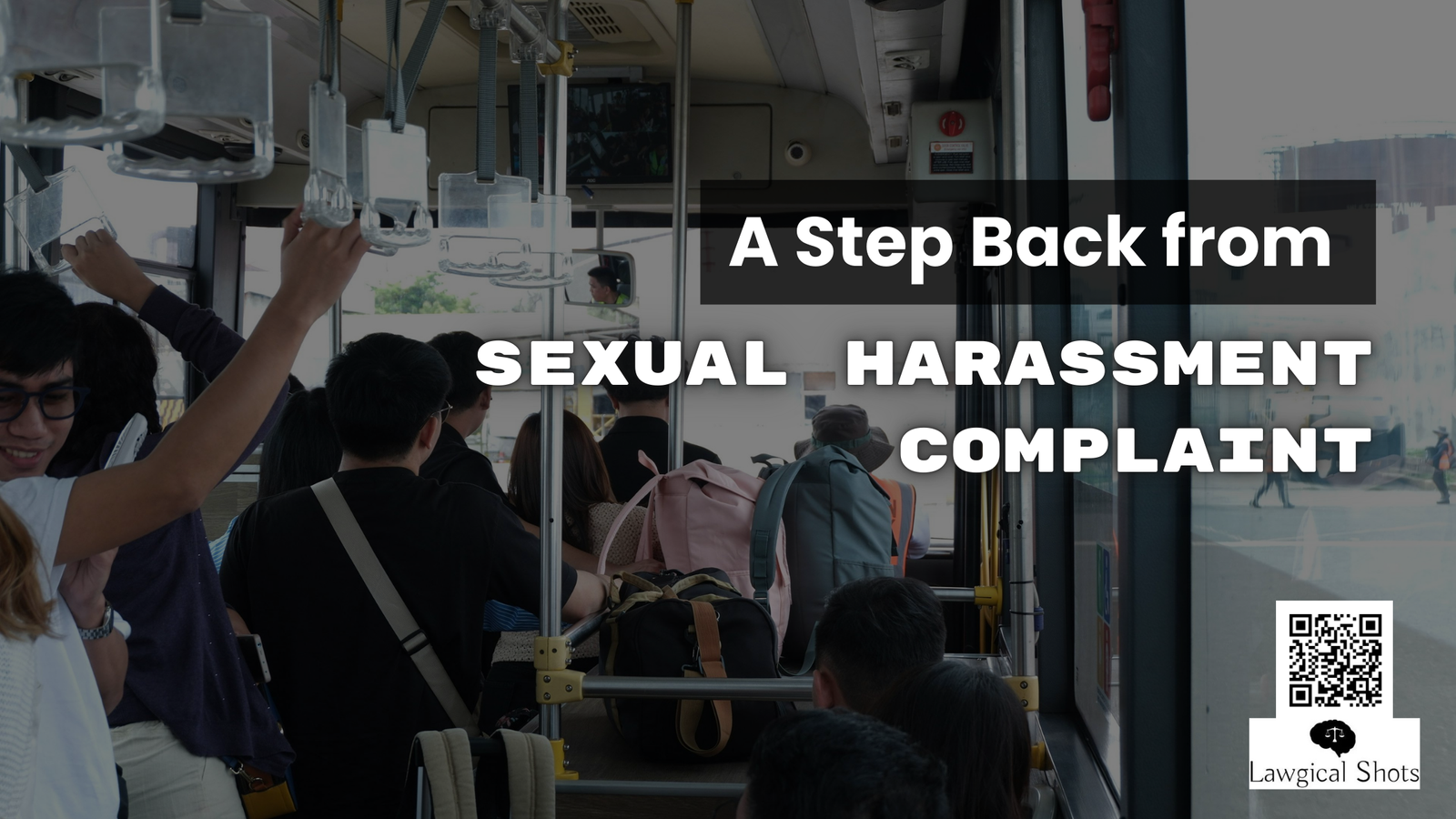
It was an ordinary commute on a state roadways bus – crowded, noisy, and familiar, as usual. Like many working women, she stood near the automated gates, adjusting her position with every sudden brake. In such spaces, personal boundaries are often negotiated silently, through small movements and unspoken understanding. At first, she assumed the discomfort she felt was accidental. But within moments, it became clear that the contact was neither incidental nor unavoidable. A man standing behind her had positioned himself deliberately, violating her personal space in a manner that was unmistakable and intentional. This man had his pants unzipped and he deliberately rubbed his private parts against her.
Realizing what really happened, she got too numb to react or reprimand. Distressed, she waited until her stop arrived and immediately deboarded. The bus moved on. The man disappeared. What remained was a sense of violation and a question she could not ignore: Should I report this, or let bygones be bygones?
She chose to go to the nearest police station to file a complaint. What followed was not what she expected. As she narrated the incident, the questions began! Not hostile, but probing in a way that shifted the focus from the alleged act to her conduct.
Why were you standing there?
Did you tell someone on the bus about what happened?
Are you certain it was intentional?
Can you explain precisely what part of the body touched you?
Each clarification demanded felt less like fact-finding and more like justification. The burden of accuracy, memory, and consistency rested entirely on her. With every repeated question, she felt her position moving from complainant to suspect.
When she finally questioned why she was required to give such explicit details, she was told that clarity was essential and a routine. “This will happen at every stage of the case,” someone said. “That’s how the process works.” That every detail would be examined again: during investigation, during trial, and during cross-examination in court.
In that moment, she understood a reality that many survivors encounter but few are prepared for. The man who harmed her might go unidentified. Offences on public transport often involve strangers, with limited evidence, and fleeting encounters. But the legal process, the repeated narration, the skepticism, the emotional exposure, that was certain. Faced with the prospect of reliving the incident in police statements, case files, and courtrooms, she reconsidered her decision. Not because the harm was trivial, but because the cost of pursuing accountability seemed overwhelming.
Hence, she chose not to proceed…..
Secondary Victimisation by the System Itself
What this woman experienced at the police station is widely recognised in law and criminology as secondary victimisation. It is the additional trauma inflicted on survivors through insensitive procedures, disbelief, or intrusive questioning by institutions meant to protect them.
Indian courts have repeatedly acknowledged that survivors of sexual offences often face humiliation, moral judgment, and psychological distress during reporting and trial. The Supreme Court has observed that such treatment can be as damaging as the original offence itself, discouraging victims from coming forward and eroding trust in the justice system.
When procedure goes in the absence of empathy or context, it risks transforming legitimate fact-finding into an ordeal, one that places survivors on trial instead of alleged offenders.
The Larger Question: Access to Justice or Endurance of Process?
Her decision to withdraw was not a failure of courage, nor a reflection of the seriousness of the offence. It was a rational response to a system that implicitly demanded emotional resilience as the price of justice.
This story is not about the absence of legal provisions. India has laws, precedents, and procedural safeguards in place. It is about how those laws are enforced, and how institutional attitudes can affect crime reporting. When survivors need to defend their credibility, choices, and reactions in a repeated manner, justice becomes conditional. It is available only to those who can endure the process.
Conclusion: The Need for Institutional Reform
If reporting sexual harassment continues to feel like an act of self-sacrifice, many will choose silence. This is not because the law is inadequate, but because its application is overwhelming.
Meaningful reform must go beyond legislation. It requires:
- Regular police training on trauma-informed questioning
- Accountability mechanisms for insensitive handling of complaints
- A shift from suspicion-based inquiry to survivor-centric investigation
Until then, stories like this will continue where the wrongdoing goes unchallenged, not for lack of law, but because the process itself becomes the punishment.